
Table of contents
- What is Digital Transformation?
- The 4 Main Themes of a Digital Transformation Strategy
- How to Create a Digital Transformation Strategy?
- Why a Digital Transformation Strategy Matters?
- Common Failure Patterns in Digital Transformation Strategy
- How to Initiate a Digital Transformation Strategy?
- Who Should Be Involved in Building the Strategy?
- What Happens Without a Digital Transformation Strategy?
- Key Trends Shaping Digital Transformation Strategy
- Advantages of Digital Transformation
- Disadvantages and Risks to Manage
- Real World Digital Transformation Examples
- Earn Your Bachelor’s in Applied Data Science
A digital transformation strategy is an enterprise level action plan that leverages technology to fundamentally change business operations, drive innovation, and create new value. It involves redesigning business processes and models to improve efficiency and deliver competitiveness in the digital economy.
Organizations that treat digital transformation as a business strategy, not a technology project, outperform others in measurable outcomes like revenue growth and cost reduction. When transformation initiatives stall, it is often due to a poorly defined strategy rather than a lack of tools or budget. This guide explains the critical components of a digital transformation strategy, how to build one, and the consequences of skipping this foundational step. It is designed for senior executives accountable for significant business outcomes.
What is Digital Transformation?
A digital transformation strategy aligns an organization’s technology investments with its business goals. This strategic plan repositions the organization within the digital economy, not by simply upgrading technology, but by refining business models and processes for competitive advantage and efficiency. The objective is to create durable competitive capabilities that competitors find difficult to replicate.
Digital transformation is not all about digitalizing existing processes but reimagining them to future proof the enterprise. According to Cass Business School, many organizations struggle with executing innovative ideas, but adopting models like the Digital Transformation Maturity Model can help map progress from process automation to full digital integration.
See also: Check out our guide on developing a digital business strategy for enterprise success.
Digitally Transform Your Business
The 4 Main Themes of a Digital Transformation Strategy
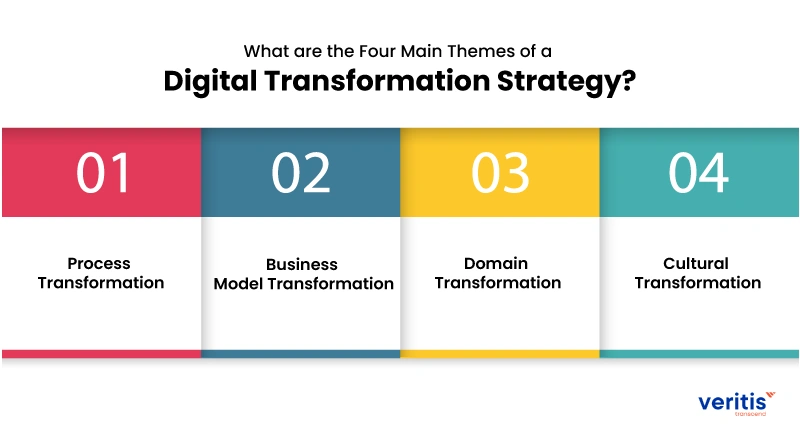
Digital transformation does not mean the same thing to every organization. However, it consistently operates across four primary themes. Understanding these themes prevents the common mistake of treating transformation as a single binary goal rather than an evolving, long term commitment.
1) Process Transformation
This involves revising internal processes to enhance quality, reduce costs, and increase efficiency. Technologies like AI and robotic process automation optimize operations such as supply chain management.
2) Business Model Transformation
This theme focuses on how an organization delivers value. For example, transitioning from traditional sales to service models can revolutionize market engagement.
3) Domain Transformation
Reimagining products and services often leads to new markets and revenue streams. Expanding beyond traditional boundaries can unlock significant value.
4) Cultural Transformation
Cultural changes involve embracing a digital first mindset, fostering innovation, and promoting agile and decentralized decision making within organizations.
How to Create a Digital Transformation Strategy?
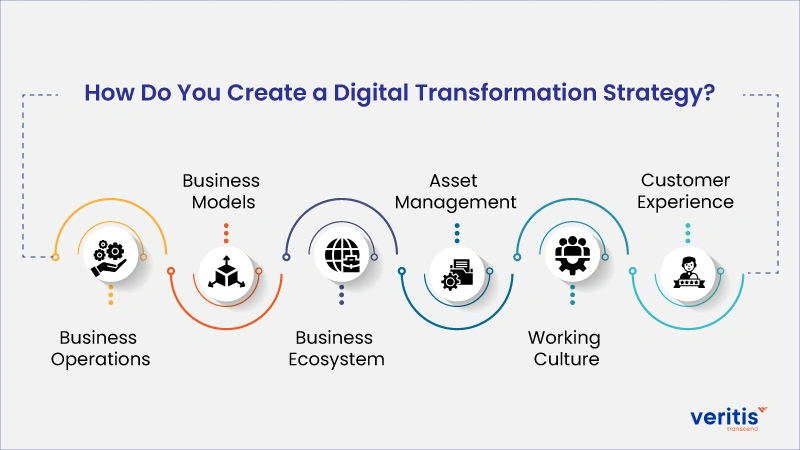
Building a digital strategy requires an honest assessment of the current state across key dimensions such as business operations, business models, ecosystems, asset management, working culture, and customer experience.
1) Business Operations
Automation and process optimization are critical to aligning digital strategies with business goals, ultimately improving customer value.
2) Business Models
Adapting value propositions and revenue models may require moving away from traditional business structures to stay competitive.
3) Business Ecosystem
Participating in digital ecosystems can provide insights that drive partnerships and preempt competitive threats.
4) Asset Management
Treating customer relationships and information as valuable assets is crucial to transformation success.
5) Working Culture
Creating an agile, customer centric culture supports a sustainable transformation environment by breaking down silos and improving digital maturity.
6) Customer Experience
Prioritizing customer needs over technological capabilities ensures that transformation initiatives are genuinely impactful.
For more insights, see: Strategic benefits of digital transformation for enterprises.
Useful link: How Leading Enterprises Use Applied Generative AI for Digital Transformation?
Why a Digital Transformation Strategy Matters?
The pandemic underscored the need for a digital transformation strategy, making transformation a key survival metric for enterprises. Those with defined strategies thrived, delivering remote capabilities rapidly and transforming operations, while unprepared competitors faltered.
1) The Financial Scale of Transformation
According to IDC projections, global investment in digital transformation reached USD 1.8 trillion in 2022, with a compound annual growth rate (CAGR) forecast at 16.6 percent through 2025. Despite high spending, many projects underperform due to unclear strategies (Source: IDC).
2) Strategy Duration and the Pace Problem
McKinsey reported that companies accelerated digital investments by 3 to 7 years due to the pandemic. Successful strategies require nimble, agile approaches rather than protracted timelines.
Explore more: Top digital transformation trends for enterprises in 2026.
Common Failure Patterns in Digital Transformation Strategy
Skipping critical components like diagnosis, guiding policy, and execution plan leads to failure. Harvard’s Michael Porter and UCLA’s Richard Rumelt highlight that effective strategy requires a unique, actionable plan with clear conditions for success.
1) Skipping Diagnosis
Organizations without proper digital diagnosis may experience chaos, with isolated initiatives lacking coherence and effectiveness.
2) Skipping Policy
Without a guiding policy, local choices diverge from global goals, causing fragmentation and inefficiency.
3) Skipping Planning
Transformation requires a detailed, executable plan with clear ownership and milestones to drive results.
How to Initiate a Digital Transformation Strategy?
Successful transformation starts with communication, innovation focused on solving customer challenges, and technology support that aligns with the strategy, rather than preceding it.
1) Communications
Continuous, clear communication articulates the transformation’s purpose and expected outcomes to all stakeholders.
2) Innovation
Effective innovation listens to customer needs and corrects current operational frictions, not just technology adoption.
3) Technology
Strategic technology selections ensure change occurs efficiently, without accumulating technical debt.
Who Should Be Involved in Building the Strategy?
A diverse stakeholder group ensures the strategy reflects the organization’s full scope, involving people from communications, technology, and management.
1) Communications Personnel
They manage the transformation narrative internally and externally, aligning organizational messaging.
2) Technology Experts
They translate strategy into actionable technical decisions, ensuring system integration and risk management.
3) Management
Executive management resolves conflicts, allocates resources, and champions the change required for transformation.
Talk to a Digital Transformation Expert
What Happens Without a Digital Transformation Strategy?
Lacking a digital transformation strategy isn’t the absence of change; it’s a lack of directed change, resulting in missed integration opportunities, deteriorating customer experiences, and increased cybersecurity vulnerabilities.
Organizations without strategic direction adapt more slowly, take on greater risks, and fail to capitalize on technology investments. Inaction’s costs escalate over time.
Key Trends Shaping Digital Transformation Strategy
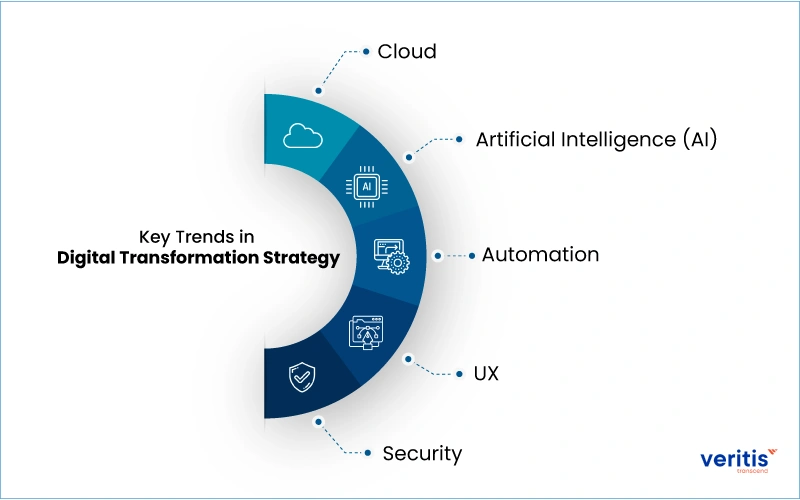
1) Cloud
Transitioning to a cloud first approach involves building robust governance and operating models, not just migrating workloads.
2) Artificial Intelligence
AI investments leverage consolidated data to improve decision making processes and enhance customer experiences at scale.
3) Automation
Scaling automation alongside AI helps manage complex tasks and accelerates system development through low code platforms.
4) User Experience
Focus on UX is widespread, driving immersive technological applications in fields like retail and remote work environments.
5) Security
Implementing security within strategies safeguards against expanded digital threats, with frameworks like cybersecurity mesh architecture providing integration support.
Explore essential digital transformation technologies to watch for a deeper dive.
Advantages of Digital Transformation
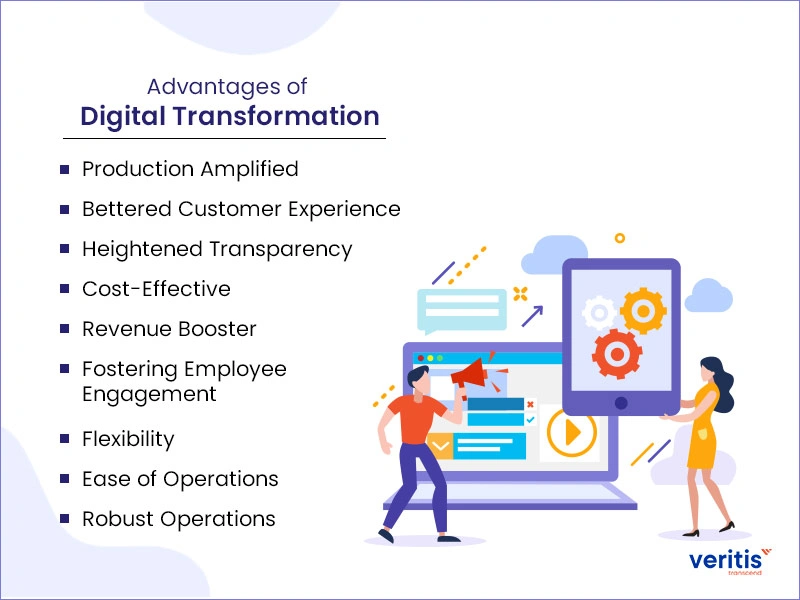
When executed against a clear strategy, digital transformation delivers outcomes across nine operational and commercial dimensions.
1) Amplified Production
Automation and process optimization increase throughput without proportional increases in headcount or cost.
2) Better Customer Experience
Digital channels and personalization capabilities allow organizations to meet customers where they are and respond to their needs in real time.
3) Heightened Transparency
Digital systems create auditable data trails that improve governance, compliance, and operational visibility.
4) Cost Efficiency
Elimination of manual processes, reduction of error rates, and consolidation of technology platforms reduce operating costs over time.
5) Revenue Growth
New digital channels, business models, and customer segments generate incremental revenue that the pre transformation business could not access.
6) Employee Engagement
Removing low value manual work and providing better tools increase employee satisfaction and retention in competitive talent markets.
7) Flexibility
Cloud based infrastructure and modular architecture allow the organization to scale up or down and pivot faster than competitors running on legacy systems.
8) Ease of Operations
Integrated systems reduce the friction of cross functional coordination and accelerate decision making at every level.
9) Operational Resilience
Digitally mature organizations recover from disruption faster because their processes are documented, automated, and less dependent on individual knowledge holders.
Disadvantages and Risks to Manage
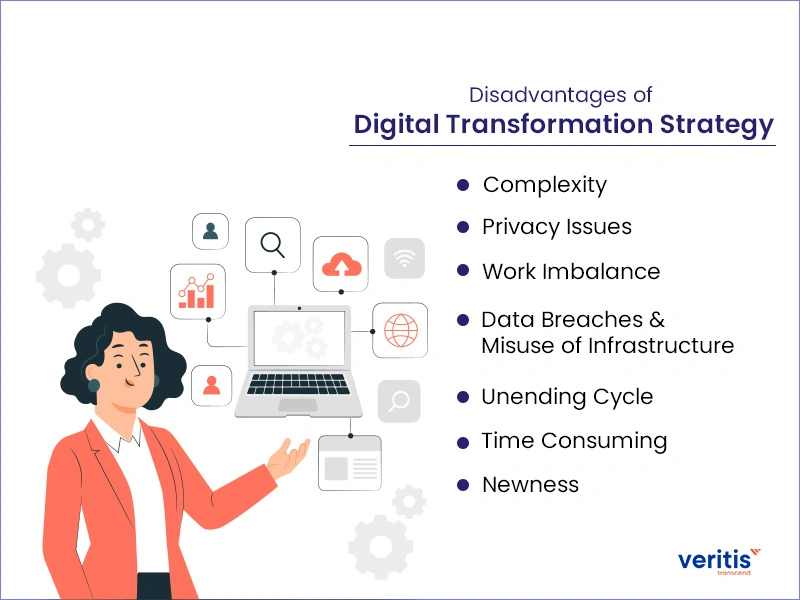
No transformation program is without risk. Leaders who acknowledge these challenges in the planning phase manage them more effectively during execution.
1) Complexity
Integrating new digital systems with existing infrastructure is technically demanding and organizationally disruptive. Underestimating this complexity is the single most common cause of cost overruns.
2) Privacy Issues
Collecting and using customer data at scale creates regulatory exposure under frameworks such as GDPR and CCPA. Privacy must be a design requirement, not an afterthought.
3) Work Imbalance
Transformation programs place significant demands on a small number of high performing employees. Without deliberate workload management, burnout erodes the program’s human capital.
4) Data Breaches and Infrastructure Misuse
Expanding digital capabilities expands the attack surface. Every new system or integration point is a potential vulnerability if security is not built in from the start.
5) The Ongoing Cycle
Digital transformation is not a one time project. The competitive and technological environment continues to evolve, requiring sustained investment and strategic reassessment.
6) Time Investment
Meaningful transformation takes longer than most organizations initially plan. Building in realistic timelines and communicating them clearly prevent the credibility damage caused by missed milestones.
7) Change Fatigue
Employees and leaders who have been through repeated cycles of transformation become resistant to new initiatives. Managing the pace of change is as important as managing the scope.
Useful link: How Digital Transformation in Finance and Accounting is Reshaping Business Operations?
Real World Digital Transformation Examples
These case studies of McDonald’s, Domino’s, Netflix, and Spotify illustrate successful digital transformation strategies:
1) McDonald’s
McDonald’s invested in technology to enhance customer experience via digital ordering and AI driven menu boards.
2) Domino’s
Domino’s technology overhaul improved its competitive edge, helping it dominate US digital pizza orders.
3) Netflix
Netflix transformed from DVD rentals to a leading streaming service through strategic digital investments and original content creation.
4) Spotify
Spotify personalized music experiences with data and AI, becoming a leader in digital music delivery.
Earn Your Bachelor’s in Applied Data Science
Pursuing a bachelor’s degree in Applied Data Science can deepen your understanding of digital transformation and analytics, preparing you to lead strategic data initiatives.
Key Takeaways
- A digital transformation strategy is key for driving significant enterprise outcomes.
- Technology must align with strategic objectives, not lead them.
- Successful transformations are ongoing, adaptive processes, not one time projects.
- Embrace key technological trends to stay competitive and secure.
Strategic Insight Before You Act
Effective digital transformation requires strategy to evolve continuously instead of being treated as a single initiative. Diagnose current conditions, craft a guiding policy, execute against an actionable plan, and remain agile to adapt to future changes.
Veritis provides comprehensive digital transformation services, helping enterprises across the US navigate strategic planning and execution. If your transformation efforts require greater direction, start by thoroughly evaluating your organization’s current position.